
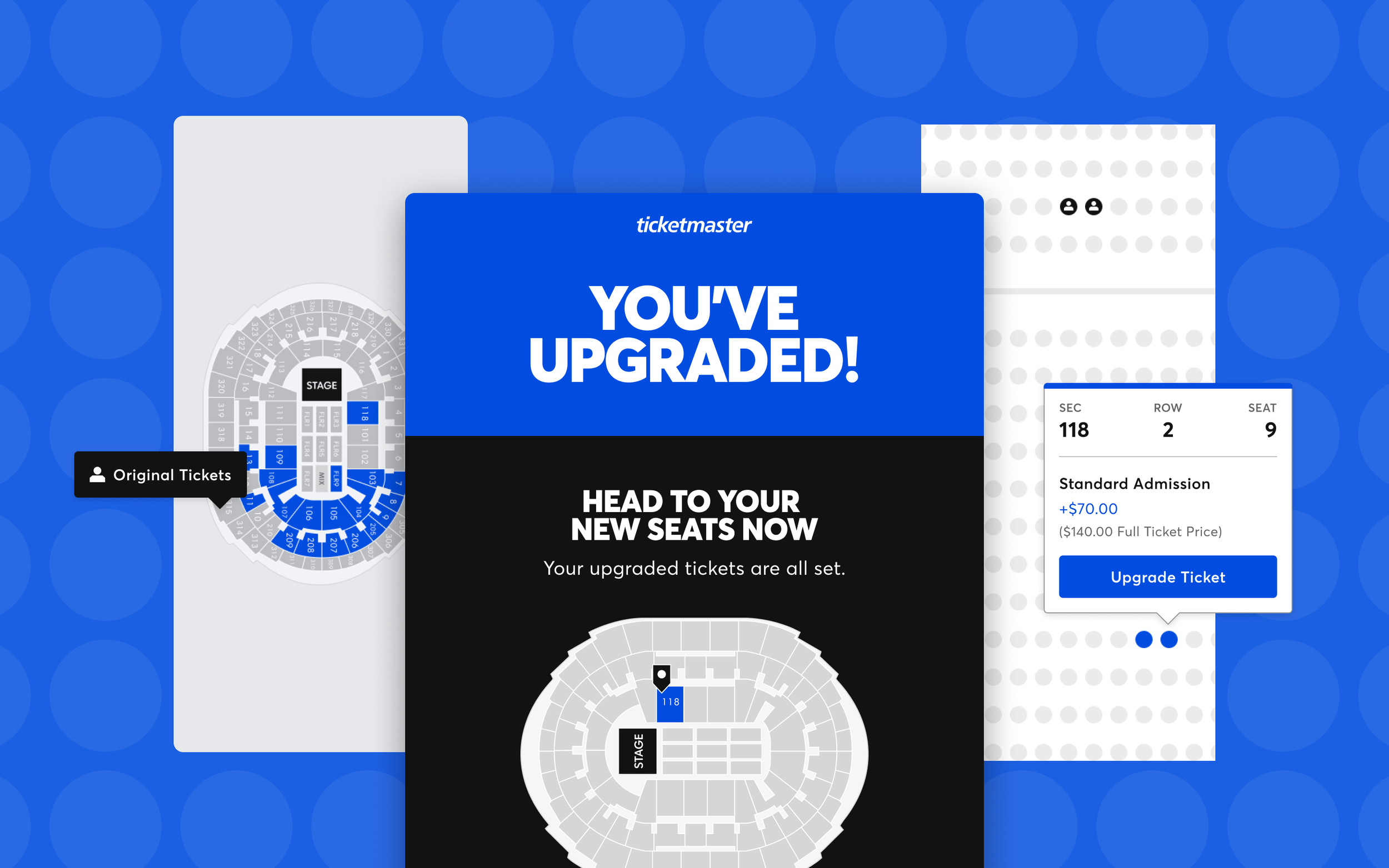
Ticketmaster’s first self service upgrade experience
Length: 6 Months
Role: Senior Product Designer (UX/UI)
Skills: UI design, User flows, Wireframing, Prototyping, User testing and Competitor analysis
The Opportunity
Fans often want to improve their seats after purchasing tickets, whether to get closer to the stage, switch from standing to seating, or increase comfort. However, Ticketmaster and most other ticketing platforms treat purchases as final, forcing users to resell tickets or contact support to make changes.
At Ticketmaster, this resulted in significant friction and operational overhead, with approximately 620,000 annual support requests related to ticket upgrades and exchanges. A large portion of these were driven by fans wanting better seats, highlighting a clear gap in the product experience. This presented an opportunity to create a self-service upgrade capability that improves flexibility for fans while unlocking additional revenue from premium inventory.
~620,000
upgrade and exchange support requests
~480,000
requesting upgraded within the same event

The Vision
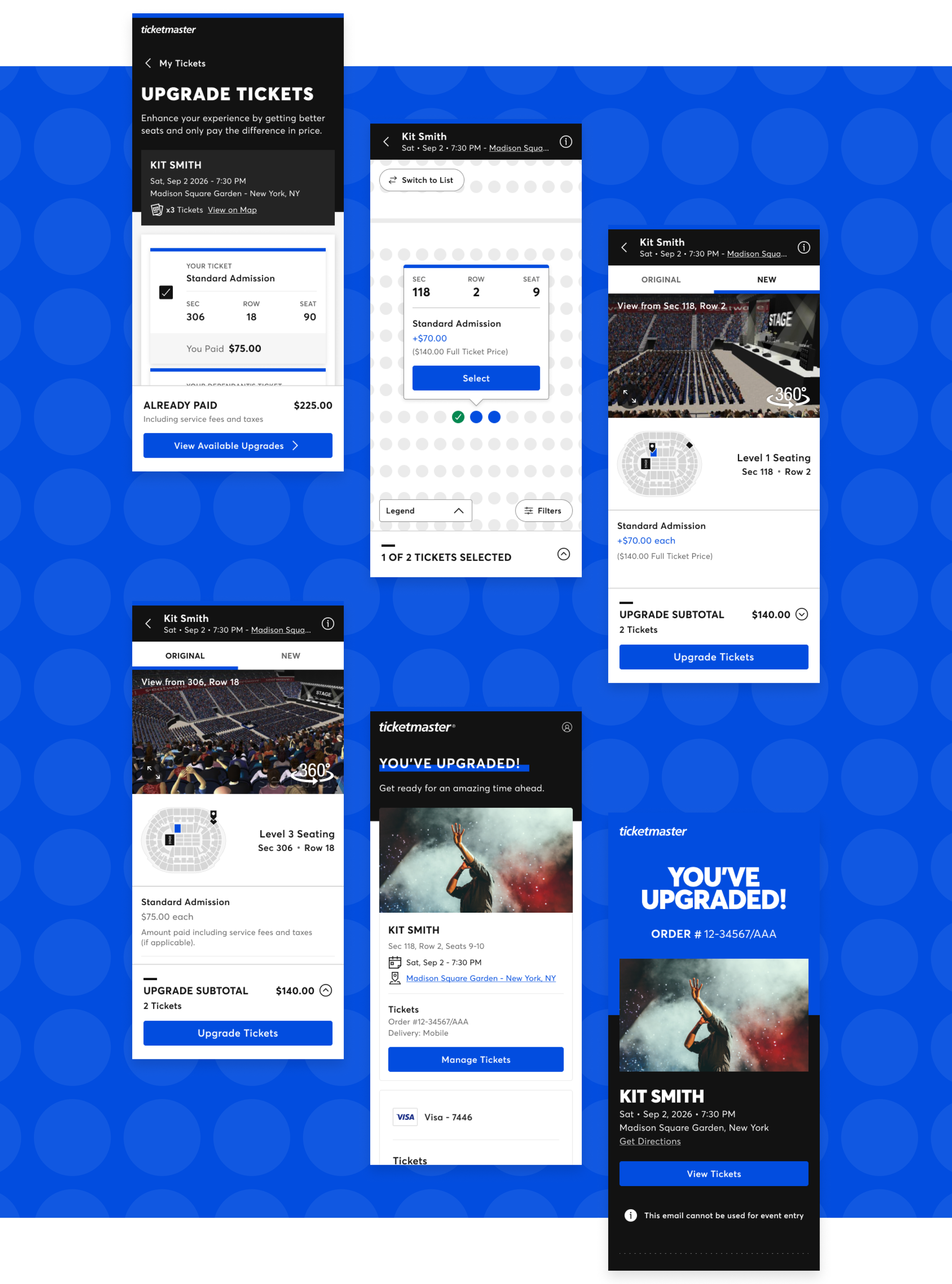
Our goal was to establish upgrades as a core post-purchase capability, giving fans the flexibility to improve their seats within the same event, both before and after entering the venue.
The experience needed to feel like a natural extension of Ticketmaster’s existing seat selection and purchase flow, enabling users to browse better seats, understand pricing clearly, and complete upgrades through a familiar checkout journey.
Given the complexity of Ticketmaster’s ecosystem, I also needed to ensure the solution could scale across platforms while balancing technical constraints, legal requirements, and usability.
Discovery
To shape the experience, I brought together internal insights, external research, and user validation. Analysis of Fan Support data revealed that most ticket change requests were driven by a desire to improve the event experience, rather than cancel purchases.
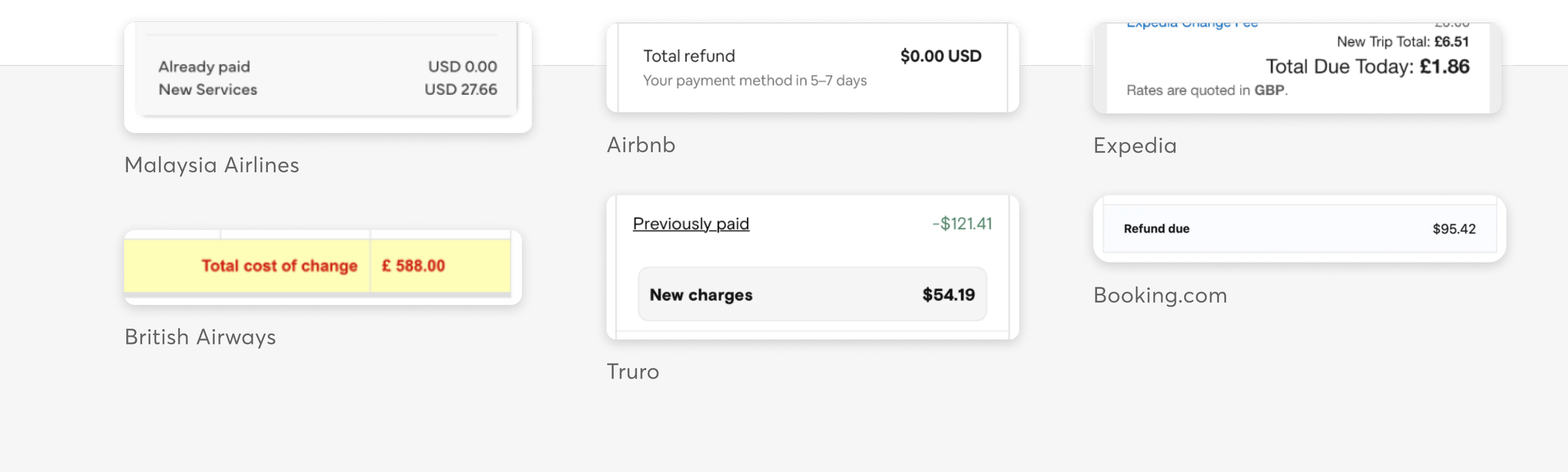
Looking beyond ticketing, I focused my competitor analysis on platforms within the travel industry to understand how post-purchase changes are handled at scale. A key takeaway was how these platforms communicate pricing, typically either surfacing the full cost of the new booking or clearly highlighting the price difference.
I validated these insights through a combination of qualitative and quantitative research, including five moderated user interviews and a survey of 100 participants. This allowed me to confirm key user needs and pain points, which I translated into a clear set of Jobs To Be Done and user goals to guide the design.
5 moderated interviews
100 user survey
Iteration & Testing
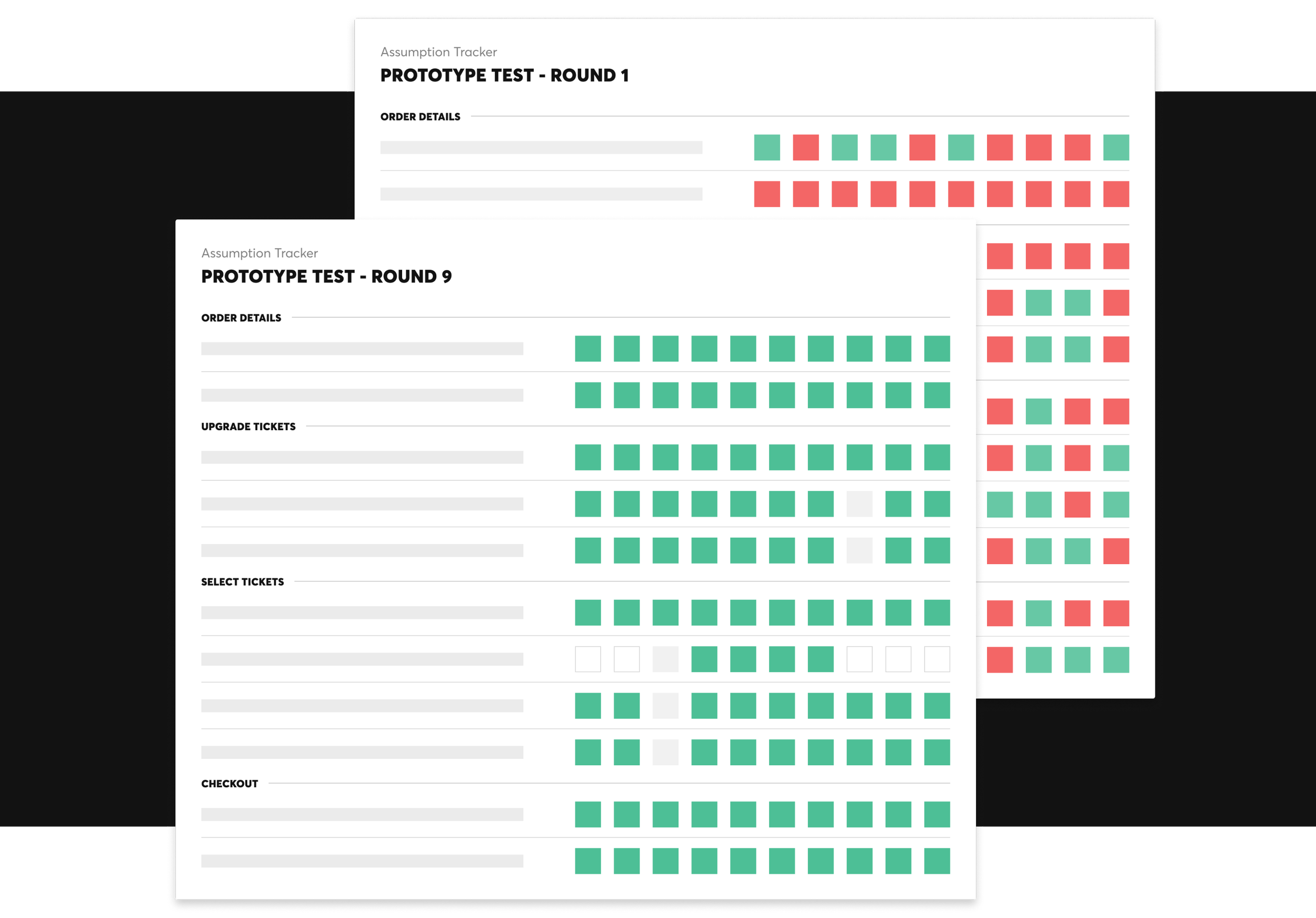
Given the complexity of ticket pricing and order replacement logic, continuous validation was critical throughout the project. Over the course of the design process, I ran 9 rounds of prototype testing with a total of 100 participants.
Using assumption mapping, I identified key hypotheses and areas of risk, allowing me to focus each round of testing on the most critical points of uncertainty and friction. This approach enabled me to systematically validate decisions, refine the experience, and progressively improve clarity and usability with each iteration.
9 user testing rounds
100 unmoderated tests
Key Challenge - Upgrade Pricing
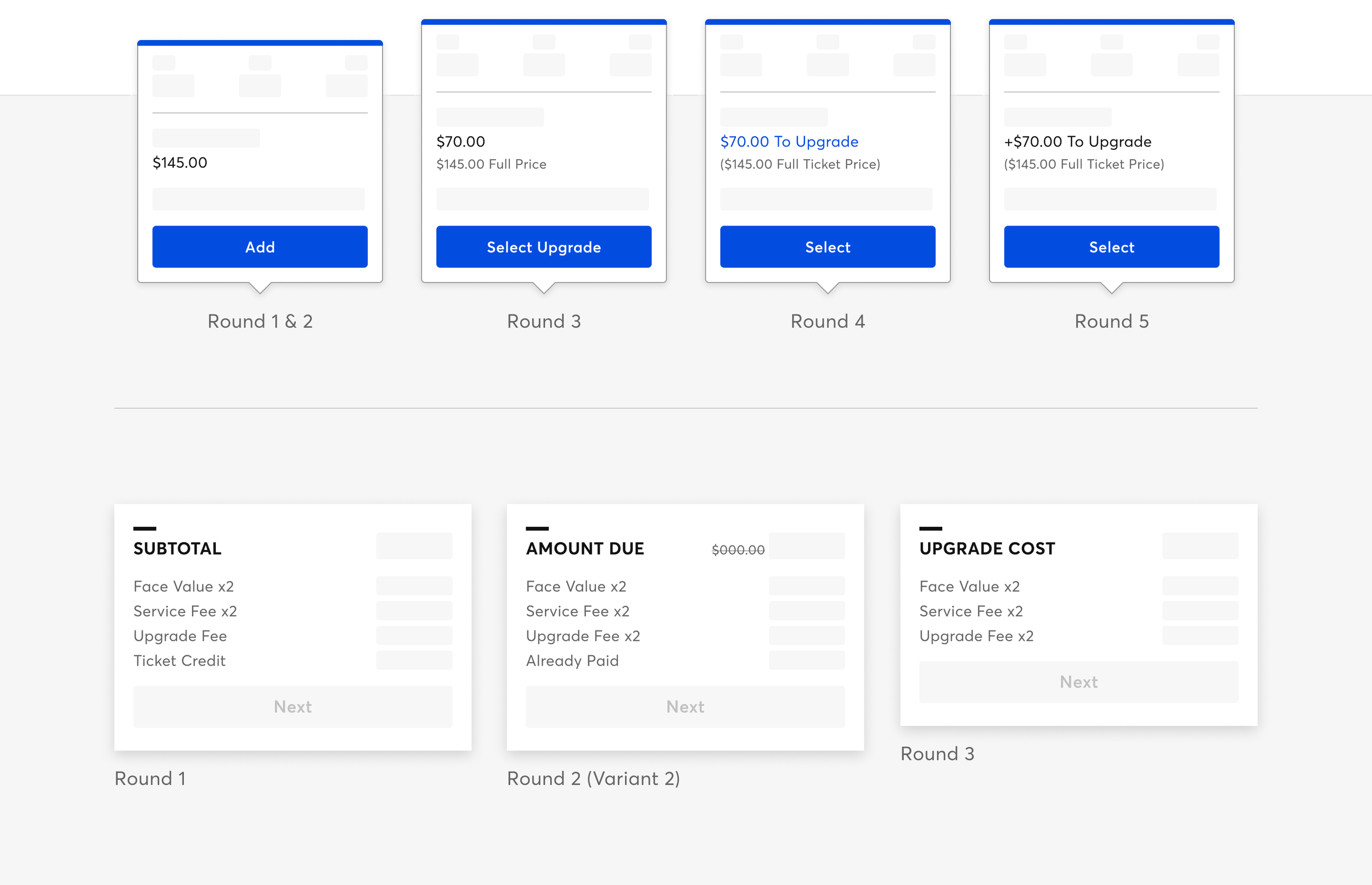
Pricing was the most complex and critical part of the experience. Early testing showed that users struggled to understand the relationship between their original tickets, the new ticket price, and the amount they needed to pay.
Through multiple rounds of iteration, I refined the pricing model to balance clarity and transparency while meeting legal requirements. The final design surfaces the upgrade cost prominently, alongside the full ticket price and a clear breakdown of fees. By clearly showing what had already been paid and the final amount due, users no longer needed to calculate the difference themselves, significantly improving comprehension and confidence.
The Outcome
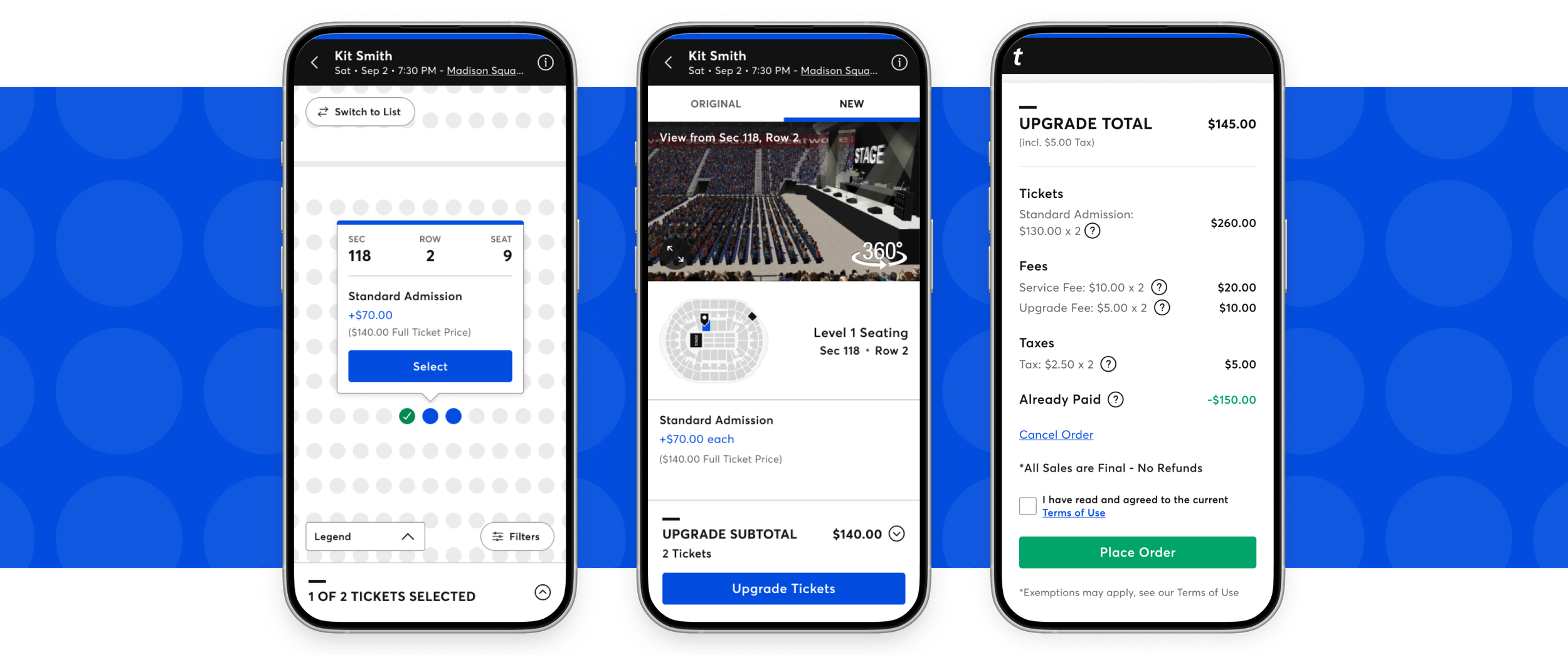
Over six months, I led the end-to-end design of the upgrade experience across web and mobile, collaborating with more than twenty cross-functional teams to integrate it into Ticketmaster’s purchase ecosystem. The final solution allows fans to browse better seats, understand upgrade pricing, and complete upgrades through a seamless, familiar flow.
Beyond immediate impact, this feature establishes a strong foundation for expanding post-purchase flexibility across the platform.
The Impact
The feature has now launched and is currently being rolled out, with performance data still being gathered. Success will be measured against the following metrics:
Upgrade completion rate
Upgrade conversion rate
Revenue from upgraded inventory
Reduction in support requests
Beyond these success metrics, I am also monitoring fan behaviour to better understand how upgrades are being used and to inform future iterations:
Amount - How much fans are spending on individual upgrades
Timing - When in the journey are fans upgrading
Location - Where fans upgrade to within the venue compared to their original seats
Quantity - Whether fans upgrade all tickets in an order or only partially
Together, these insights will help shape future enhancements and expand post-purchase flexibility across the platform.